Fall Yard Maintenance Checklist for Minnesota Homeowners
Fall is when next summer\'s lawn and landscape is decided. This Minnesota fall cleanup checklist covers leaves, cutbacks, mulch, and protecting your edging.

October in Carver County is a countdown. Every yard task you finish now pays off twice — once in a lawn that greens up faster next April, and again in landscape beds that come through winter without heaving, rotting, or bleeding rock into the grass. Fall yard maintenance in Minnesota is not the same as raking leaves and calling it done; the freeze coming is what makes each step matter.
Here is the checklist we use when prepping properties across Waconia, Mound, Minnetonka, and Chaska for winter — plus the seasonal cutbacks that decide how your beds wake up next spring.
Finish Leaf Cleanup Late, Not Just Early
Most homeowners rake in mid-October and assume they are done. In Minnesota, the oaks disagree. Plan on a final leaf pass in early-to-mid November after the last drop — leaves matted under early snow smother grass and invite snow mold by spring.
- Mulch-mow light leaf cover into the lawn where you can; shredded leaves feed the soil.
- Remove heavy leaf piles from beds, not the lawn only — wet leaves packed against shrub stems and perennial crowns cause rot and rodent damage over winter.
- Keep leaves out of rock and gravel beds. Leaves decompose into a soil layer that grows weeds straight through the landscape rock by June.
Seasonal Cutbacks: What to Cut, What to Leave
Cutting back perennials is where fall maintenance gets strategic. Not everything wants a haircut at the same time.
Cut back in fall:
- Peonies, daylilies, and hostas — their foliage collapses into mush after the first hard frost and harbors disease if left in place.
- Iris and bearded iris — cut low; iris borers overwinter in old foliage.
- Fruit and vegetable beds — remove spent plants entirely; diseased tomato and squash debris carries problems into next season.
- Overgrown ornamental grasses near foundations — a dried grass bundle against siding is a mouse highway into the house.
Leave standing until spring:
- Most ornamental grasses (away from the house) — the dried foliage insulates the crown and adds winter interest.
- Coneflowers, black-eyed Susans, and other seed-head perennials — they feed birds through winter and self-seed gently.
- Roses and tender shrubs — prune these in spring; a fall cut in Minnesota often causes winter kill at the wound.
When in doubt, the rule of thumb is simple: anything that turns to slime, cut it down. Anything that holds its shape and looks good with frost on it, let it stand.
Mulch and Beds: Winter Armor for Your Soil
A fresh 2-to-3-inch layer of mulch in late fall does more than look tidy. It insulates perennial roots against the freeze-thaw cycle that shoves shallow-rooted plants out of the ground — the same cycle that wreaks havoc on landscape edges.
- Top up mulch around perennials, shrubs, and trees, keeping it pulled back from trunks and stems.
- Rake rock beds level and wash accumulated debris out before snow locks it in place.
- Cut back any bed edges so crisp lines survive until spring instead of blurring under snowmelt.
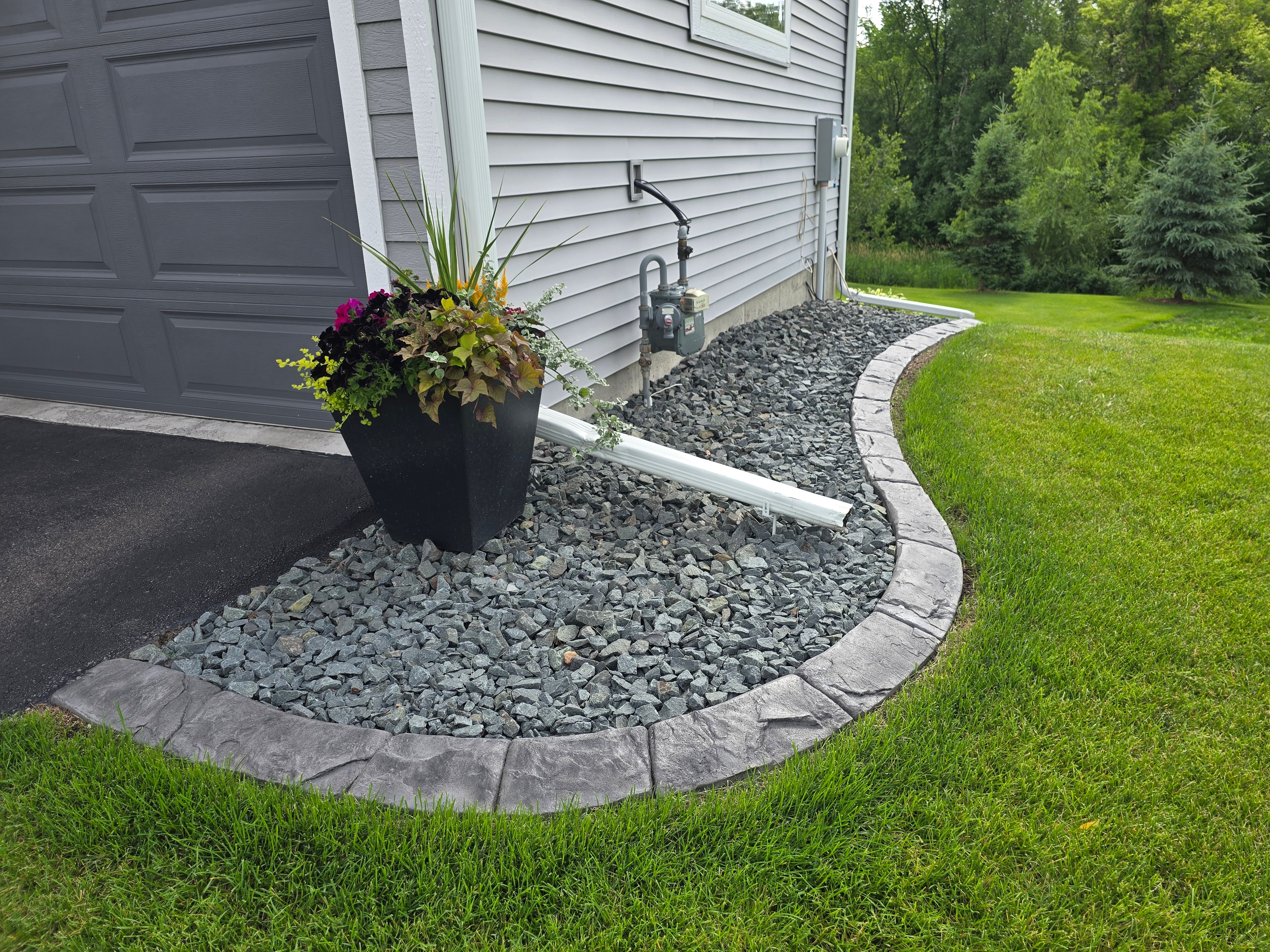
One honest note from installing curbs across the western Twin Cities for over a decade: fall is when weak bed borders show themselves. If your plastic or thin steel edging heaved out of line this month, freeze-thaw will finish the job over winter. Replacing failed edging with poured concrete curbing in fall — or scheduling it for early spring — is one of the few landscape upgrades that pays for itself in pure avoided maintenance.
The Last Mow Matters More Than You Think
Keep mowing until growth stops — usually early November here. The final cut of the season should drop the deck about an inch lower than summer height, around 2 to 2.5 inches.
Taller grass left for winter mats down under snow and feeds snow mold and voles. Cutting too short stresses the crown. That final slightly-short mow, done after most leaves are down, is the single highest-value ten minutes in the fall lawn calendar.
Winterize the Rest of the Property
A short punch list before the ground freezes:
- Shut down and blow out irrigation lines — a missed zone is a burst pipe waiting for April.
- Disconnect and drain hoses; freeze-split spigots are a classic Minnesota claim.
- Wrap or guard young trees against sunscald and rabbit damage.
- Cut the lawn one final time after leaf drop and mulch whatever remains.
- Mark driveway and plow edges with stakes before the ground freezes, so winter snow removal doesn't chew up your lawn or bed lines — a courtesy that also tells your snow contractor exactly where the curb line is.
Why Fall Prep Is Really Spring Planning
Everything on this list has one theme: preventing winter damage is cheaper than repairing it. A lawn mowed short one last time greens up weeks earlier. Beds cut back properly skip a season of disease. Rock contained behind a real curb stays put, and the mower blades stay sharp.
If your fall cleanup revealed bed lines that have lost their shape or edging that heaves out every year, that is the winter project worth doing right. BorderWerx installs poured concrete landscape curbing across Waconia, Mound, Minnetonka, Chaska, and surrounding communities — most jobs completed in a single day, backed by a workmanship warranty. Get a free estimate now and be first in line when the spring schedule opens.
Explore Topics
Written by
Nick Brooks, BorderWerx
Content creator and writer sharing insights and stories.