
Why Concrete Curbing Beats Plastic Edging in Minnesota
Plastic edging cracks, heaves, and pops loose every winter. Here is why poured concrete landscape curbing survives Minnesota freeze-thaw — and looks better doing it.
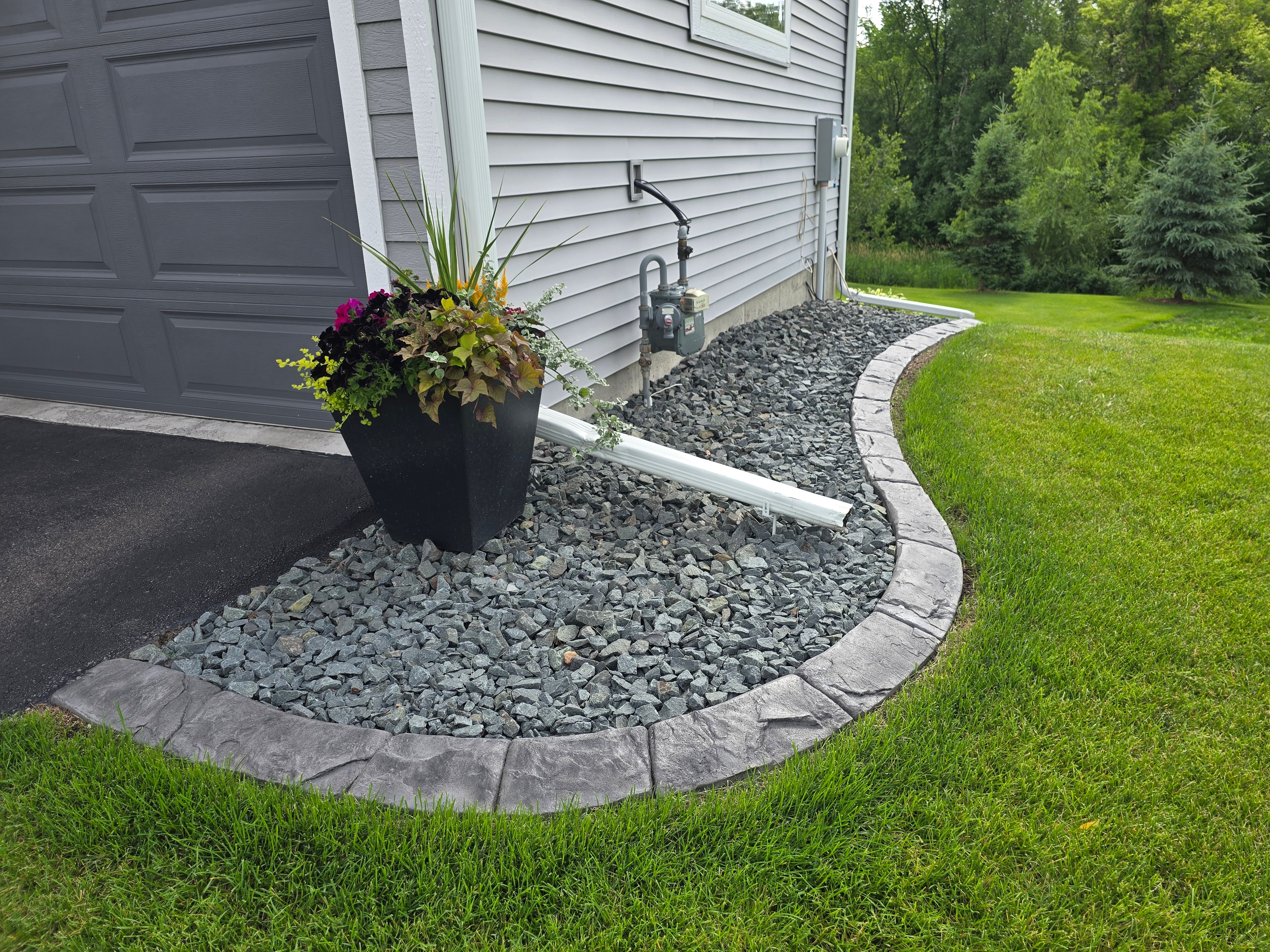
If you have ever spent a Saturday resetting popped-up black plastic edging, you already know the problem. Minnesota winters are hard on flexible edging materials, and every freeze-thaw cycle works against them. Landscape edging is supposed to be the part of your yard you install once and forget. Plastic rarely works out that way.
We install poured concrete landscape curbing across Waconia, Mound, Minnetonka, and Chaska, and the question we hear most is some version of "why not just use the plastic stuff?" It is a fair question — plastic is cheaper on day one. Here is the honest comparison, based on thousands of yards we have edged since 2014.
Minnesota Freeze-Thaw Is Brutal on Flexible Edging
Minnesota sees dozens of freeze-thaw swings in a typical winter. Moisture in the soil expands when it freezes and contracts when it thaws, and the ground around your beds moves up and down all season long.
Plastic and thin steel edging have no weight or mass to resist that movement. The ground pushes, the edging flexes, and over a few seasons it bows outward, heaves above the lawn line, or works loose from its stakes. By spring you are pulling it up and hammering it back in — every year.
Concrete curbing is different. A poured curb is a continuous, heavy, reinforced band that weighs far more per foot than any flexible product. Frost can lift the soil around it, but the curb itself stays where you put it. Small hairline movement can happen in extreme conditions, but a properly mixed, properly installed curb does not bow, pop out of the ground, or need annual attention.
Plastic Looks Like Plastic. Curbing Looks Finished.
Even when plastic edging is brand new and perfectly straight, it reads as a thin black line — a barrier, not a design element. After a season or two of sun, it fades to gray, gets nicked by the mower, and starts to look tired.
Poured concrete curbing is formed on site, so it follows the exact curves of your beds — tight radiuses, sweeping arcs, straight runs — with no seams and no visible stakes. You choose the color, the texture, and the profile, so the edging matches your house and your stonework instead of fighting them. Done well, the curb becomes part of the landscape design, not an afterthought.
It also solves a problem plastic never can: containment. A 4-to-6-inch curb above grade holds mulch, rock, and soil where they belong. No more rock spilling into the lawn and dulling your mower blades every time you edge.
The Real Cost Over Five Years
Plastic edging wins on the receipt from the home store. That is where the advantage ends. Add up what plastic actually costs over five years in Minnesota:
- Replacement sections cracked by frost and sun
- New stakes and connectors each season
- The hours spent pulling, resetting, and re-hammering every spring
- Edging that needs full replacement long before your landscape does
Concrete curbing is installed once, by professionals, in a single visit — most jobs are completed in one day. There is nothing to reset, replace, or re-stake. When you spread the cost over the life of the curb, it is almost always the less expensive choice, and it is the only one that adds to your home's curb appeal instead of subtracting from it.
Why Installation Quality Matters More Than the Material
A concrete curb is only as good as the base under it and the crew pouring it. Proper preparation — a graded trench, the right concrete mix for our climate, reinforcement, and control joints placed in the right spots — is what lets a curb ride out decades of freeze-thaw.
This is where an owner-operated crew makes a difference. At BorderWerx, every job is installed personally by the owner, with the same mix, the same base prep, and the same finishing standards every time, and our work is backed by a workmanship warranty. Since 2014 we have installed tens of thousands of feet of curbing across Carver County and the western Twin Cities, and the curbs we poured a decade ago are still holding their lines.
When Plastic Still Makes Sense
To be fair, there are situations where flexible edging is a reasonable choice: a temporary bed you plan to reshape next year, a very tight budget on a rental property, or a small utility area nobody sees. If the edging is meant to be invisible and disposable, plastic does that job.
But if you are investing in your landscape — beds you will maintain for years, a front yard you want to be proud of, a property you plan to sell someday — the edging is the frame around everything else. A frame worth having is not plastic.
The Bottom Line
In Minnesota's climate, plastic edging is a seasonal product and concrete curbing is a permanent one. One comes up with the frost every spring; the other holds its crisp line through decade after decade of freeze-thaw while making the whole landscape look more finished.
If you are ready to stop fighting your edging every spring, BorderWerx offers free estimates for concrete landscape curbing throughout Waconia, Mound, Minnetonka, Chaska, and the surrounding communities. Most installations are finished in a single day, and you will never reset another strip of plastic again.
Explore Topics
Written by
Nick Brooks, BorderWerx
Content creator and writer sharing insights and stories.

